01
STAGE 01
Supplier Sourcing
Supplier discovery, comparative sourcing, procurement briefs and commercial diligence.
Explore Supplier SourcingCoordinate sourcing, engineering, manufacturing, quality and fulfillment.
A product program is not four isolated projects. Decisions made early influence manufacturability, cost, inspection and delivery.
Supplier discovery, comparative sourcing, procurement briefs and commercial diligence.
Explore Supplier SourcingFreight coordination, warehousing, distribution planning and fulfillment workflows.
Explore Logistics & FulfillmentIndustrial design, engineering, prototype coordination and product development.
Explore Product DesignFactory review, inspection planning, test coordination and corrective-action tracking.
Explore Quality & InspectionsAre requirements, tolerances and assumptions documented?
Can capability, commercial terms and lead times be substantiated?
Who verifies conformity and how are exceptions handled?
Who takes action when production or movement deviates from plan?
Sourcing, engineering, inspection and logistics are often purchased or managed as separate activities, even though decisions in one stage affect the economics of every other. A tolerance chosen during design may limit supplier options. A contractual delivery term may shift risk. A missed inspection criterion may turn a shipment into costly rework.
The strongest supply chain decisions begin with a documented requirement and an honest account of uncertainty. We look at technical capability, commercial terms, quality evidence, logistics responsibility and the actions available when conditions change. International programs add complexity through lead times, border requirements, currency, duties and differing market rules, which need to be assessed specifically.
What must be made, within which tolerances and use conditions?
Drawings, materials, acceptance and change control.Can the proposed source meet the requirement consistently?
Capacity, process evidence, samples and quality history.How will conformity be checked and exceptions resolved?
Inspection plan, tests, responsibility and disposition.Where do risk, cost and ownership transfer?
Trade terms, landed cost, lead time and escalation paths.A product team approves a prototype and requests large-scale quotes. The fastest supplier offers an attractive price but has not demonstrated the critical tolerance in repeat production. The logistics plan assumes a delivery commitment that the contract does not support.
A more robust sequence would resolve manufacturability, validate supplier capability, document acceptance requirements and clarify transport responsibility before major commitments. The result may be a slower initial decision but a better-informed one. This is a hypothetical example, not a claim of actual results.
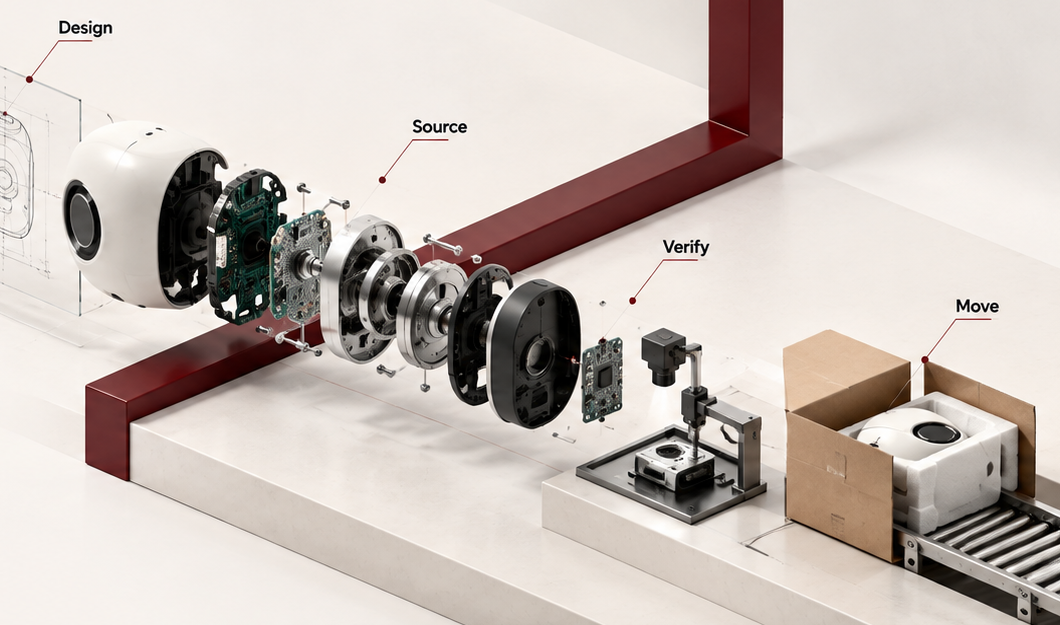
A credible production plan makes specification, supplier evidence, verification and delivery responsibility visible in one decision record.
Share the product, sourcing or fulfillment constraint you need to resolve.
Discuss an Engagement